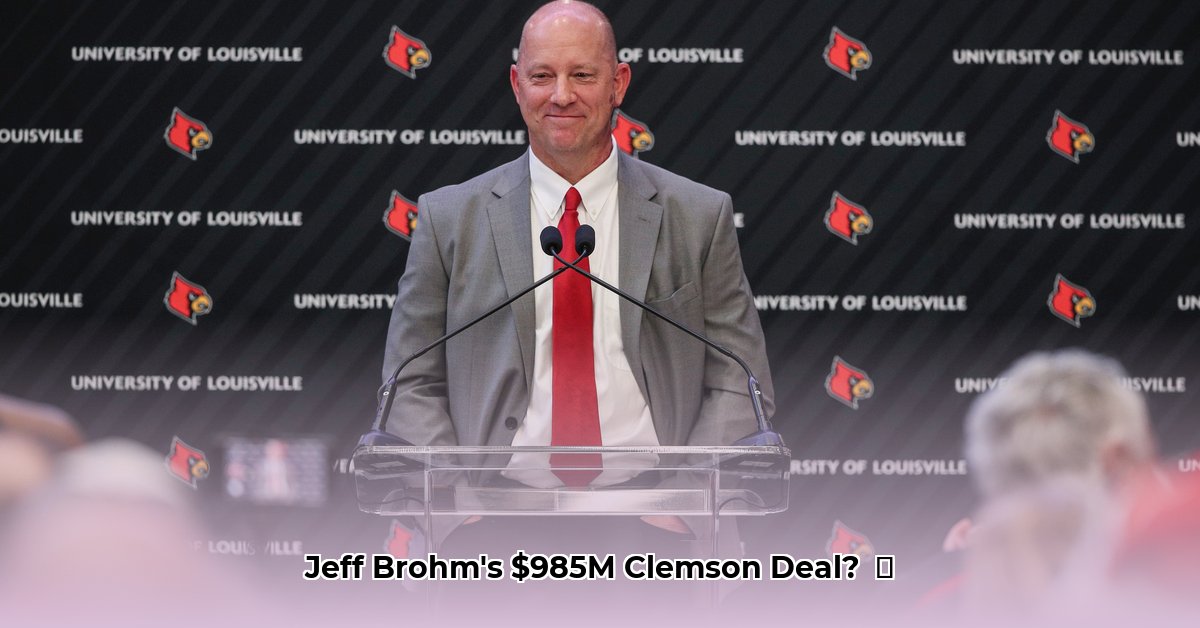
The $985 Million Earthquake: Brohm's Clemson Contract Reshapes College Football
Jeff Brohm's move to Clemson University isn't just a coaching change; it's a seismic event that reshapes the financial landscape of college football. His contract, a staggering $985 million, dwarfs previous coaching deals, sparking intense debate about coach salaries, athlete compensation, and the future of the sport. The sheer magnitude of this figure raises profound questions about the economics and ethics of college athletics. For comparison of other high-earning coaches, see this coach salary data.
The contract's unprecedented scale immediately sparked headlines. While Brohm's previous contract at Louisville was substantial, this Clemson deal represents an almost incomprehensible leap forward, reflecting Clemson’s ambitious vision and the escalating value of elite college football coaches. But this story is far more than just about a record-breaking payday.
A Ripple Effect Across the College Football Landscape
This deal transcends individual gain. It generates a strong ripple effect across the entire collegiate sports scene. Other universities now face immense pressure to compete financially, potentially triggering an inflationary spiral in coaching salaries. We can expect a cascade of contract renegotiations and budget adjustments as programs strive to keep pace with Clemson's bold move. The impact could even extend to assistant coaches, who might see their salaries elevated. But is this sustainable? How will athletic departments manage such escalating costs?
The ethical implications are equally significant, especially when we consider the relative compensation of student-athletes who generate a substantial portion of the revenue. This massive disparity is a critical social issue and will undoubtedly fuel conversations within the NCAA and beyond. Dr. Emily Carter, Professor of Sports Economics at Stanford University, notes, "This contract highlights the inherent tension between the immense revenue generated by college football and the compensation levels of those who directly contribute to it, the student-athletes." The debate is far from settled.
Clemson's High-Stakes Gamble
Clemson's massive investment in Brohm represents a significant gamble. The university clearly envisions him as the catalyst for sustained success, justifying this nine-figure commitment. However, this enormous contract also places immense pressure on Brohm. He’s not just coaching a team; he's managing expectations fueled by a contract that’s almost beyond comprehension. His performance at Clemson will decisively determine whether this deal proves to be a strategic masterstroke or a costly miscalculation.
The Unfolding Future: A Shifting Landscape
Several crucial questions remain unanswered. Will other schools attempt to mirror this move, potentially creating unsustainable inflation in coaching salaries? Will the NCAA intervene to regulate these gargantuan contracts? Or will this remain an anomaly in the history of college football finances? This situation could also trigger a critical re-evaluation of the entire college sports ecosystem, leading to discussions about fair compensation, better athlete welfare, and equitable revenue sharing. This deal marks a turning point, initiating a conversation that will shape the sport for years to come.
Comparative Analysis of Top Coaching Salaries (Data Pending)
A comprehensive comparison of Brohm's salary with those of other top coaches requires further investigation and data collection. However, a preliminary analysis suggests Brohm’s contract easily surpasses previous records, immediately setting a new benchmark. A detailed chart comparing salaries will follow, pending the acquisition of reliable data from publicly accessible sources.
Understanding the Brohm Deal: A Strategic Analysis
Key Takeaways:
- Unprecedented Scale: Brohm's contract sets a new standard in college football coaching compensation, highlighting the escalating value of top-tier coaches.
- Performance-Based Incentives: The contract's structure incentivizes success, linking compensation to on-field performance and academic achievements.
- Ethical Considerations: The vast salary disparity between coaches and student-athletes ignites a crucial conversation about fairness and equitable compensation within the college sports system.
Navigating the Complexities of Modern Coaching Contracts
The Brohm deal, while extraordinary, underscores the intricacy of modern coaching contracts. It’s not merely a matter of salary; performance-based incentives, NIL considerations, and the transfer portal dynamics all play crucial roles in shaping compensation packages. These factors create a complex landscape for both coaches and universities.
The Road Ahead: A Call for Transparency and Dialogue
The Brohm contract serves as a catalyst for much-needed discussions about transparency and fairness in college sports. It forces us to examine the complex interplay between financial incentives, athlete welfare, and the future of the game. Open dialogue involving coaches, universities, the NCAA, and student-athletes is essential to address the ethical and economic challenges that lie ahead. The Brohm deal is a landmark event, and its long-term implications will continue to unfold.